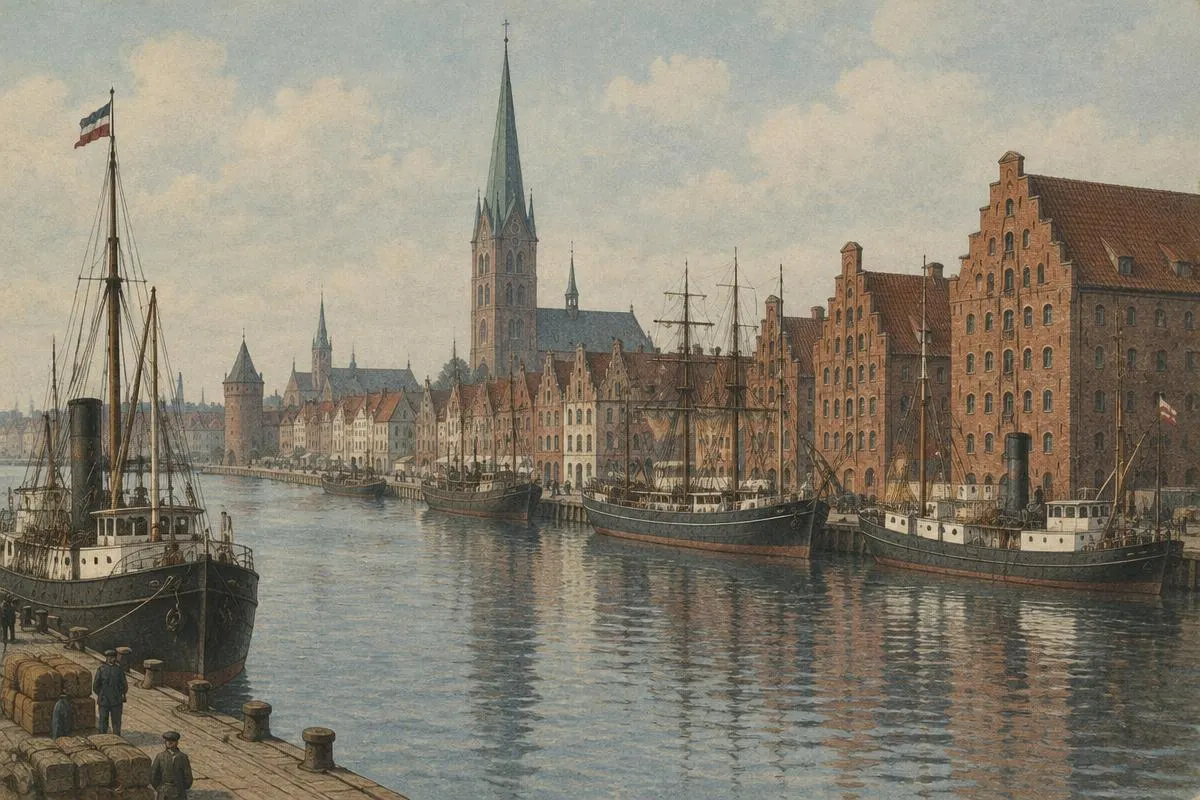
Early Maritime Connections
The coasts of Mecklenburg and the Danish islands of Falster and Lolland face each other across roughly 40 kilometres of sea. In the Middle Ages, Rostock merchants traded with Denmark as part of the Hanseatic network, and small vessels carried goods and travellers across the water. Regular, scheduled passenger traffic only became possible with steam in the nineteenth century.
Rostock as a Baltic Port
Rostock was granted town rights in 1218 and became a prosperous Hanseatic city, known for shipbuilding and trade. Its university, founded in 1419, is one of the oldest in northern Europe. Warnemünde, at the mouth of the river Warnow, served as Rostock's outer harbour and became a seaside resort in the nineteenth century. In the German Democratic Republic, Rostock developed into the country's main seaport, with a new overseas port (Überseehafen) opening in 1960.
Gedser and Southern Denmark
Gedser, at the southern tip of Falster, is the southernmost town in Denmark. Its location made it the natural Danish terminus for a crossing to Mecklenburg. With the arrival of the railway ferry, the small settlement became an international gateway, with a station, harbour facilities and customs buildings.
Railway and Passenger Transportation
On 1 October 1903 a railway ferry connection opened between Gedser and Warnemünde, operated jointly by Danish State Railways and the Mecklenburg railway administration. It created a direct rail route between Copenhagen and Berlin, and for decades express trains travelled across the sea in the ferries' holds. The crossing took around two hours.
The Impact of European Political Changes
The route's history mirrors Europe's twentieth century. Services were disrupted during both world wars. After 1949 Warnemünde lay in the German Democratic Republic, and the route became one of the few rail links between Scandinavia and the Eastern Bloc. West German travellers used other crossings, such as Großenbrode–Gedser and later Puttgarden–Rødby and Travemünde–Gedser.
The fall of the Berlin Wall in 1989 and German reunification in 1990 transformed the situation. Traffic patterns shifted, and in the mid-1990s the German terminal was moved from Warnemünde to Rostock's overseas port, while railway traffic on the route ended.
Modern Ferry Operations
Since 1998, the route has been operated by Scandlines. In the 2010s new hybrid ferries were introduced, reducing journey times and emissions. The crossing remains an important link between eastern Germany, Berlin and the Danish islands, and an alternative route for travellers heading to Copenhagen and Sweden.
Car Ferry Transportation
Today the route is primarily a car and lorry crossing. Terminals at Rostock and Gedser have multiple check-in lanes and connect directly to motorways: the A19 towards Berlin on the German side and the E55 towards Copenhagen on the Danish side. For drivers, a ferry from Denmark to Rostock offers a convenient start to journeys into eastern Germany.
The Evolution of Ferry Ticketing
Rail passengers once bought through tickets at their departure station, while drivers paid at harbour offices. Today, those who want to book a Rostock–Gedser ferry or find Rostock–Gedser tickets online do so through the operator's website. Scandinec does not sell tickets — please visit the official Scandlines website for current information.
Historical Timeline
- 1218
Rostock town rights
Rostock becomes a chartered town and later a Hanseatic member.
- 1903
Rail ferry opens
1 October: Gedser–Warnemünde railway ferry begins.
- 1949
Divided Germany
Warnemünde lies in the GDR; the route links Denmark with East Germany.
- 1960
Overseas port
Rostock Überseehafen opens.
- 1990
Reunification
German reunification reshapes Baltic traffic.
- 1990s
Move to Rostock
Terminal moves from Warnemünde to Rostock; rail traffic ends.
- 1998
Scandlines
Route becomes part of the new Scandlines company.
Then and Now
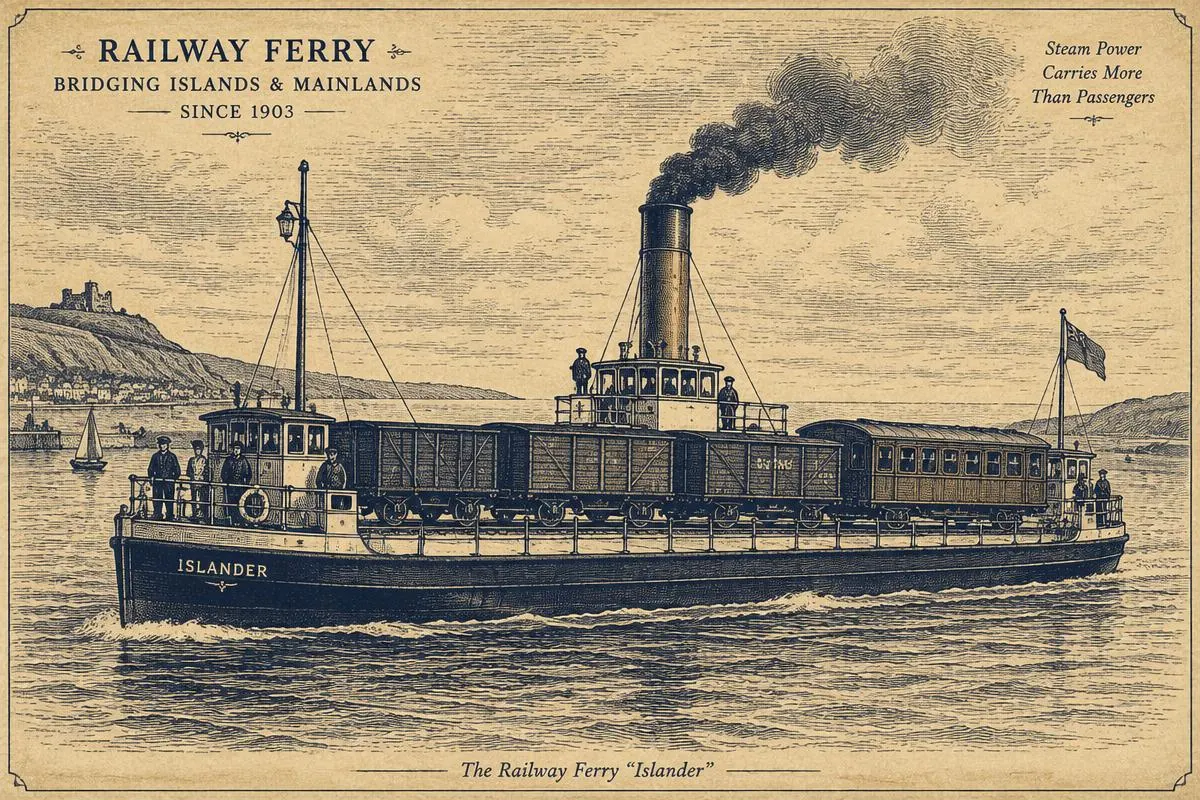
- Steam propulsion
- Rail wagons on deck
- About two hours from Warnemünde
- Tickets bought at stations
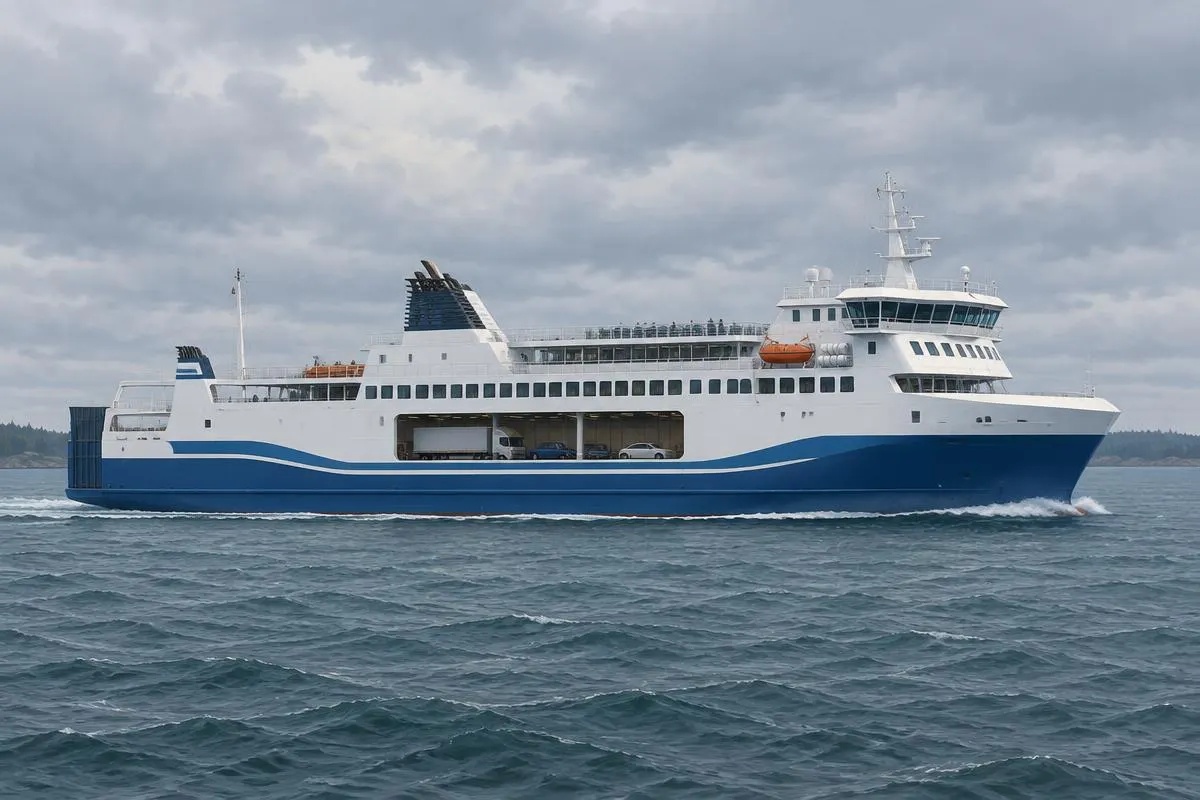
- Hybrid diesel-electric propulsion
- Cars and lorries
- Rostock overseas port terminal
- Online booking and e-tickets