Independent maritime history publication · Not affiliated with Scandlines or any ferry operator · We do not sell tickets
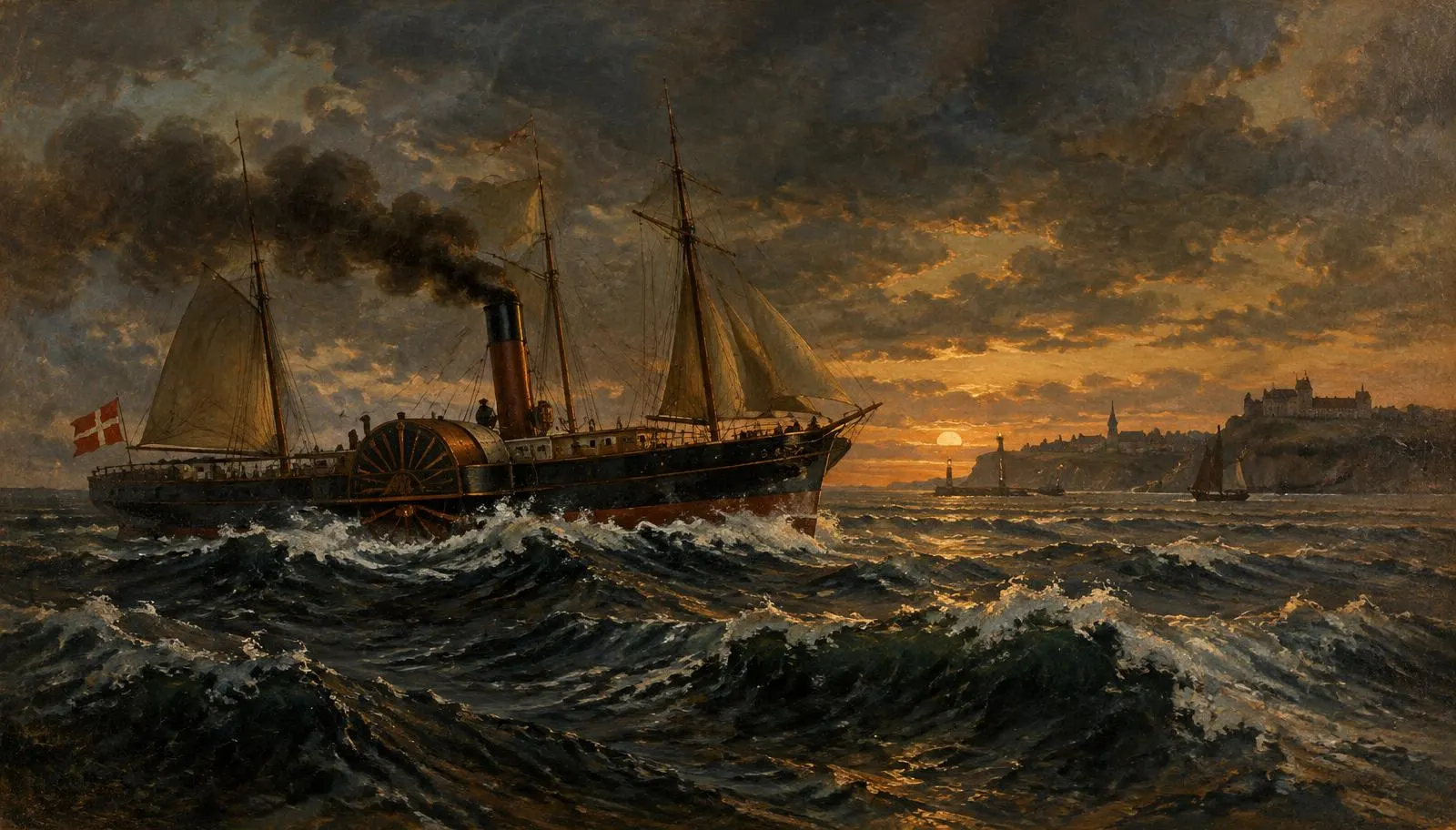
Painted illustration of a nineteenth-century paddle steamer with sails crossing a rough Baltic sea at sunset, a coastal town and lighthouse in the distance

Baltic Ferry History & Heritage

The History of Baltic Sea Ferry Travel

Connecting Nations Across the Baltic Sea

Explore the history of ferry transportation, maritime trade and the connections that shaped Germany, Denmark and Sweden.

Illustration created for Scandinec — not a historical photograph.

Chapter I

The Baltic Sea — A Region Connected by Water

Look at a map of northern Europe and the importance of the Baltic Sea becomes obvious. It is a long, shallow inland sea, almost enclosed by land, reaching from the Danish straits in the west to the gulfs of Finland and Bothnia in the north and east. Its only link to the North Sea and the Atlantic runs through three narrow channels: the Øresund, the Great Belt and the Little Belt. Whoever travelled between continental Europe and Scandinavia had to deal with these waters.

Germany, Denmark and Sweden have shared this sea for more than a thousand years. Denmark sits at the hinge, a peninsula and a scatter of islands between the German mainland and the Swedish province of Scania, which itself was Danish until 1658. For centuries the three peoples traded, intermarried, fought wars and exchanged ideas across short stretches of water. Political borders moved repeatedly; the sea stayed constant.

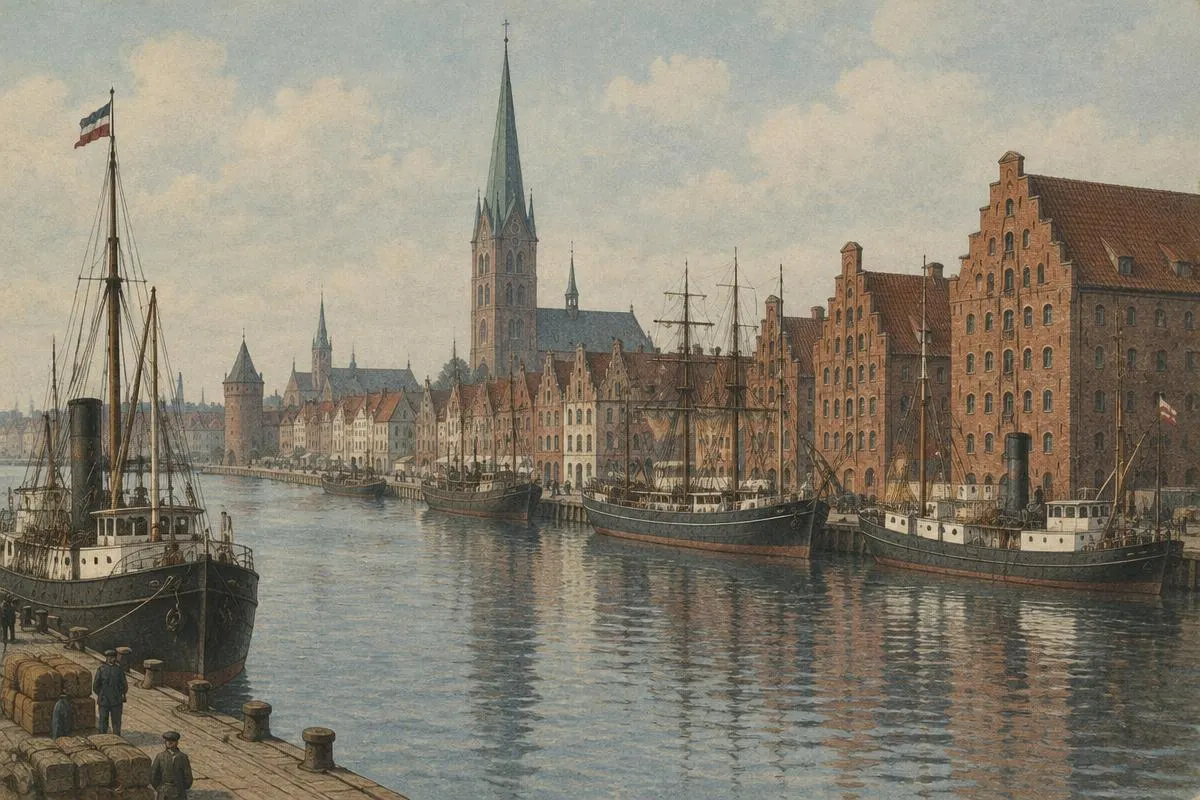
Because so much of the region is made of islands and coastline, maritime transport was not a luxury but a necessity. Before modern bridges, a journey from Hamburg to Copenhagen, or from Copenhagen to Malmö, always involved at least one crossing by boat. Grain, timber, iron, herring, salt and textiles moved by ship long before railways existed, and the coastal towns that handled this traffic — Lübeck, Rostock, Wismar, Copenhagen, Helsingør, Malmö — became some of the wealthiest places in medieval Europe.

Sea routes also carried culture. Merchants brought architecture, law, language and religion with them. The brick Gothic churches of the southern Baltic, the Low German loanwords in the Scandinavian languages and the shared urban traditions of Hanseatic towns are all legacies of ships moving between ports.

Passenger transport grew out of this commercial network. Early travellers simply bought passage on cargo vessels or small sailing packets. With the arrival of steam power in the nineteenth century, crossings became scheduled, reliable and far less dependent on the wind. Railways then created a demand for ferries that could carry entire trains, and the twentieth-century rise of the private car produced the drive-on vehicle ferry that still links the region today. The story of Baltic ferries is therefore the story of how geography, trade and technology together shaped everyday travel in northern Europe.
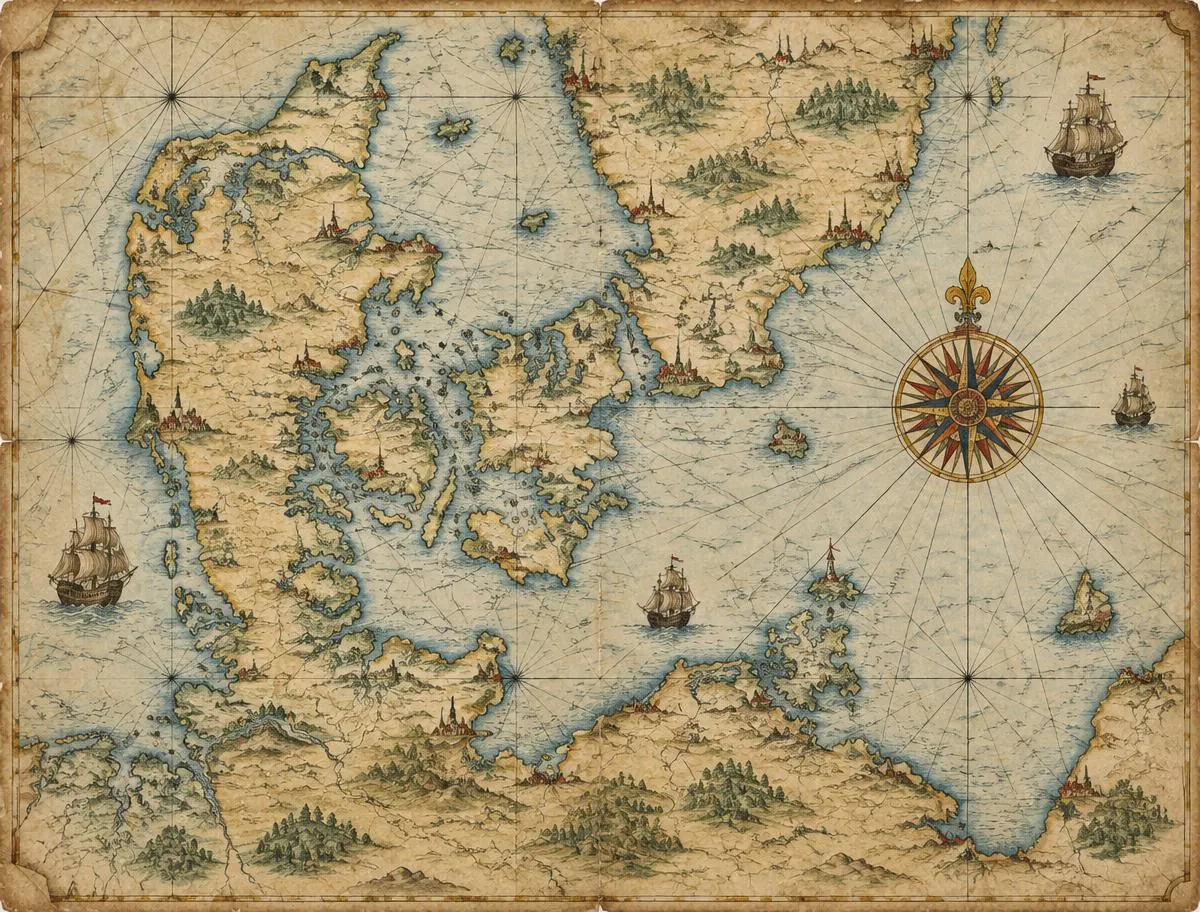
Illustrated antique-style chart of the western Baltic Sea showing Jutland, the Danish islands, southern Sweden and the north German coast with sailing ships and a compass rose
The western Baltic: the Danish straits form the gateway between continental Europe and Scandinavia. Illustration created for Scandinec — not a historical photograph.

Chapter II

Three Countries, One Maritime History

I

Germany

Germany's Baltic coast — from Flensburg and Kiel to Lübeck, Wismar, Rostock and Stralsund — was the commercial heart of the medieval Hanseatic League. In the industrial era these ports became railway terminals and naval bases, and later the departure points for ferries to Denmark and Sweden. Kiel, Puttgarden, Rostock and Sassnitz each grew into gateways to the north.

II

Denmark

Denmark is the land bridge, and the water barrier, between continental Europe and Scandinavia. Its many islands made ferries part of national life: until the fixed links of the 1990s, crossing the country itself required sea passages. Danish State Railways operated one of the world's most extensive train-ferry networks, and Danish ports faced both Germany and Sweden.

III

Sweden

Sweden's long coastline made it a maritime nation, exporting iron and timber by sea for centuries. For travellers, the short crossing from Helsingborg to Helsingør and direct services from Trelleborg and Malmö to Germany and Denmark connected the Swedish rail and road network with the continent long before the Øresund Bridge opened in 2000.

Chapter III

From Sailing Ships to Modern Ferries

Key milestones in the region's maritime transport. Dates refer to commonly cited historical sources; see each article for context.

  1. c. 800–1050

    Viking-age seafaring

    Clinker-built ships link the coasts of Jutland, the Danish islands, Scania and the southern Baltic, carrying trade goods, settlers and raiders.

  2. 1159

    Lübeck refounded

    Lübeck is re-established under Henry the Lion and grows into the leading city of what later becomes the Hanseatic League.

  3. 1819

    Steam reaches the western Baltic

    The paddle steamer Caledonia begins a regular service between Copenhagen and Kiel, one of the first steamship routes in the region.

  4. 1883

    Railway ferries on the Great Belt

    Danish State Railways introduces train ferries between Nyborg and Korsør, carrying railway wagons across water.

  5. 1903

    Gedser–Warnemünde opens

    A railway ferry connection links Denmark and Germany between Gedser and Warnemünde.

  6. 1963

    The Vogelfluglinie

    The Fehmarnsund Bridge and the Puttgarden–Rødby ferry open, creating a direct rail and road corridor between Hamburg and Copenhagen.

  7. 2000

    Øresund Bridge

    The fixed link between Copenhagen and Malmö opens on 1 July 2000.

  8. 2000s

    Digital ticketing

    Online booking, e-tickets and number-plate recognition gradually replace most terminal ticket-office sales.

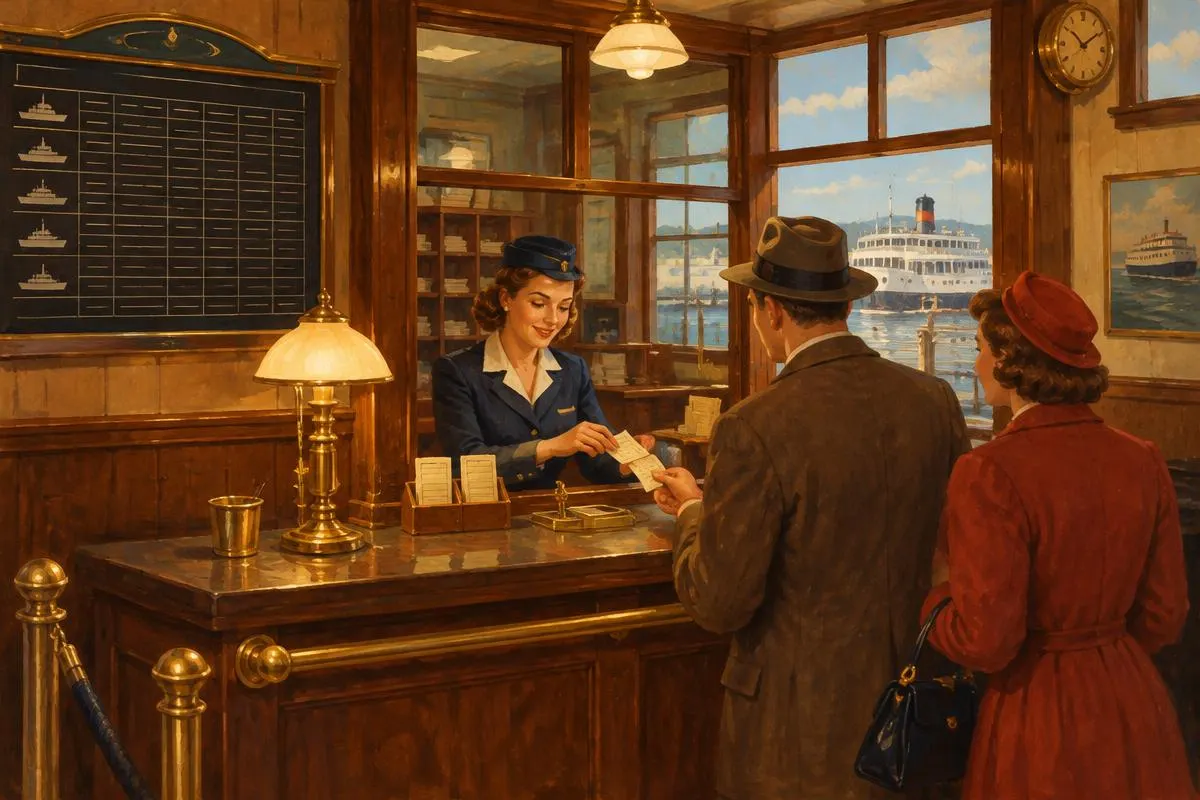
Painted illustration of travellers buying paper tickets at a wood-panelled ferry ticket office with a ship visible through the window
Before the internet, the ticket office at the quay was the traveller's first point of contact with the crossing. Illustration created for Scandinec — not a historical photograph.

Chapter V

Maritime Heritage

Ferries did far more than move people from one shore to another. They shaped where towns grew, where factories were built and where holidaymakers went. Small fishing villages such as Puttgarden, Rødby Havn and Gedser became international transit points, with railway stations, customs halls and hotels. Ports such as Trelleborg and Sassnitz owed much of their twentieth-century growth to the train ferries.

For trade, reliable ferries meant that perishable goods — Danish bacon and butter, Swedish timber products, German manufactured goods — could reach markets quickly. For tourism, they opened Scandinavia's beaches, forests and cities to millions of continental visitors, and gave Scandinavians easy access to northern Germany. The on-board shop and restaurant became part of the travel ritual for generations of families.

Today, bridges and tunnels have replaced several historic crossings, but ferries remain essential where the sea is widest. Their history explains much about the shape of modern northern Europe. Read on in our history of Baltic maritime transport, or discover how travellers moved from paper tickets to online booking.