Geography and the Need for Maritime Connections
Germany and Denmark share a land border across the Jutland peninsula, so in principle one can travel between them without crossing water at all. In practice, however, the direct line from Hamburg and Berlin to Copenhagen runs across the sea. Copenhagen lies on the island of Zealand, separated from the German coast by the Fehmarn Belt and the waters south of Falster and Lolland. Taking the land route through Jutland meant a long detour and, before 1997, a further ferry across the Great Belt.
Ferries across the southern Danish waters therefore offered the fastest route between the two capitals and between central Europe and Scandinavia as a whole. The shorter the crossing, the more attractive it became — which is why the narrow Fehmarn Belt eventually carried so much traffic.
Historical Trade Between Germany and Denmark
Commercial ties between the two countries are ancient. Hedeby, near Schleswig, was one of the great Viking-age markets. In the Middle Ages, Lübeck and the other Hanseatic towns dominated Danish trade, while Danish kings tried to control both the herring markets and the passage through the straits. The duchies of Schleswig and Holstein were for long periods ruled by the Danish crown, and their status was a source of conflict, culminating in the wars of 1848–1851 and 1864.
Despite these disputes, the economic relationship deepened. Danish farm produce found buyers in German cities, while German industrial goods, coal and machinery travelled north. Culture moved too: Low German influenced Danish vocabulary, and artists and scholars moved between Copenhagen, Kiel and Hamburg.
The Growth of Railway Transportation
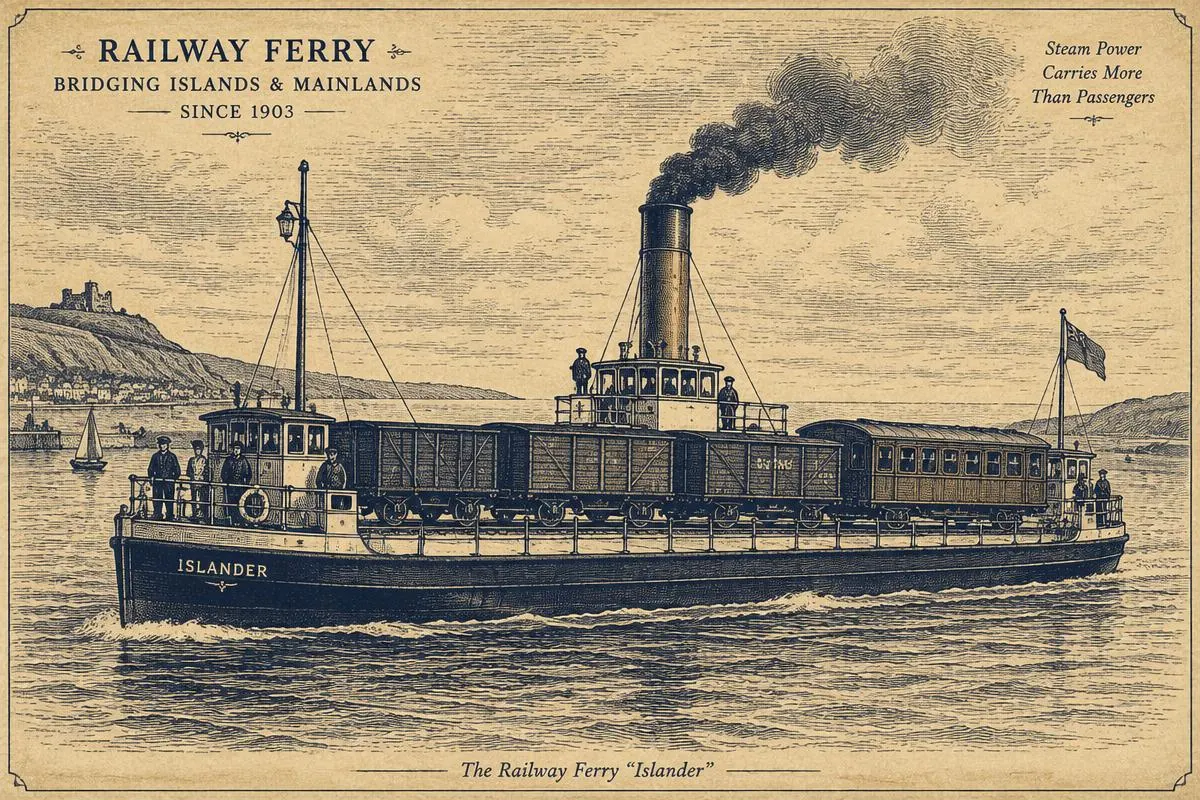
Railways reached both countries in the 1840s. The Altona–Kiel railway opened in 1844, and Denmark's first line, between Copenhagen and Roskilde, followed in 1847. As networks expanded, operators sought to connect them across the sea. Steamships ran between Kiel and Korsør from the nineteenth century, linking with trains on both sides.
The decisive step was the railway ferry. In 1903 a train ferry service opened between Gedser on Falster and Warnemünde near Rostock, allowing through-carriages from Berlin to reach Copenhagen. For six decades this was the main direct rail link between the German capital and Denmark.
The Rise of Automobile Travel
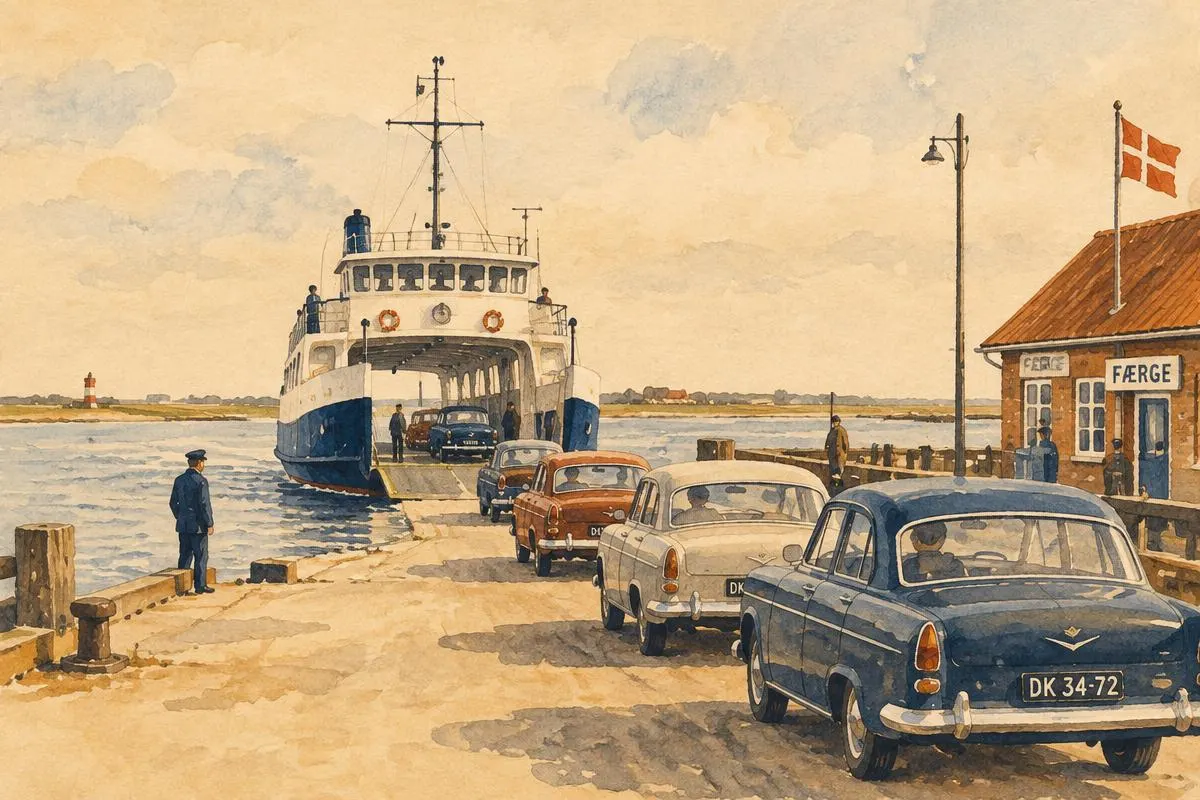
After the Second World War, car ownership grew rapidly in West Germany and Denmark. Holidaymakers and lorries needed to cross the water quickly, and ferries were redesigned with drive-through vehicle decks. The route between Großenbrode in Holstein and Gedser, opened in 1951 because Warnemünde now lay in East Germany, became an important interim link for West German traffic. Car ferries also served routes such as Kiel–Korsør and later Kiel–Bagenkop and Travemünde–Gedser.
The Germany–Denmark car ferry soon became a familiar part of holiday travel. A ferry crossing between Germany and Denmark could be combined with road journeys across Zealand to Copenhagen or onward to Sweden.
The Vogelfluglinie Connection
The idea of a "bird flight line" (Vogelfluglinie in German, Fugleflugtslinjen in Danish) refers to the direct route that migrating birds take between central Europe and Scandinavia, over Fehmarn and Lolland. Planning for a transport corridor along this line began in the 1920s and 1930s, and some construction started before the Second World War, but the project was halted.
It was revived in the 1950s through an agreement between West Germany and Denmark. On 14 May 1963 the Fehmarnsund Bridge, connecting the island of Fehmarn to the German mainland, and the new ferry harbours at Puttgarden and Rødby were officially opened. The corridor shortened the rail and road route between Hamburg and Copenhagen dramatically and became the principal link between the two countries. Read more in our history of the Puttgarden–Rødby route.
Ferry Transportation After the Second World War
The war left ports damaged, ships sunk and borders redrawn. The division of Germany cut the Gedser–Warnemünde route off from West Germany, though it continued to operate between Denmark and the German Democratic Republic. West Germany needed alternatives, which led to the Großenbrode service and ultimately to the Vogelfluglinie.
As Western Europe recovered, international travel expanded. The economic integration of Europe, rising incomes and paid holidays increased demand for ferry crossings throughout the 1960s and 1970s. Ferries grew larger, with restaurants and duty-free shops, and timetables became more frequent.
The Development of Modern Ferry Routes
After German reunification in 1990, the Gedser connection was redirected from Warnemünde to Rostock's overseas port in the mid-1990s, turning it into a modern car and lorry route. Rail traffic ended on that route at the same time. In 1998 Danish and German state ferry operations merged to form Scandlines, which has operated both Puttgarden–Rødby and Rostock–Gedser.
The Great Belt Fixed Link, completed for rail in 1997, allowed some international trains to travel via Jutland instead of by ferry. In December 2019 the last passenger trains crossed by ferry between Puttgarden and Rødby, ending more than half a century of railway ferry operation on the route.
Modern Travel Between Germany and Denmark
Today, travellers looking for a ferry from Germany to Denmark or a ferry from Denmark to Germany can choose between ferry crossings and the land route through Jutland. The short sea crossings remain popular for journeys between Hamburg or Berlin and Copenhagen, as well as for onward travel to southern Sweden. Ferries also give drivers a break from the motorway and avoid long detours.
Understanding Ferry Tickets and Timetables
In the early twentieth century, passengers typically bought tickets at railway stations or at the ferry terminal, and printed timetables were published in railway guides and newspapers. Travel agencies and motoring clubs later sold advance tickets and printed route maps. Today, the Germany Denmark ferry timetable and current Germany Denmark ferry prices are published online by the operators themselves; because fares and departures change regularly, they should always be checked directly with the ferry company. Our article on the history of ferry ticketing traces this evolution in detail.
Important notice
This website is a historical and educational information resource. We do not sell ferry tickets, process reservations or accept payments. For current tickets and bookings, please contact the relevant ferry operator.