The Baltic Sea Before Modern Transportation
The Baltic Sea took its present form after the last Ice Age, when retreating glaciers left a brackish basin that was gradually connected to the North Sea through the Danish straits. Its waters are relatively shallow, low in salt and often calm in summer, but they can be dangerous in autumn storms and, in the north and east, freeze in winter. These conditions shaped navigation for millennia.
Stone Age and Bronze Age communities already used dugout canoes and plank boats to move along the coast and between islands. By the Iron Age, rowing vessels such as the Hjortspring boat, found on the Danish island of Als, show organised seafaring. In the Viking Age, roughly 800 to 1050, clinker-built ships with a keel and a square sail allowed Scandinavians to cross open water with confidence. Trading centres such as Hedeby near present-day Schleswig, Ribe in Jutland and Birka in Sweden flourished because ships could reach them.
Most early sea travel hugged the coast. Sailors moved from headland to headland, sheltering in bays at night and waiting for favourable winds. Short crossings — across the Øresund, the Belts or the Fehmarn Belt — were part of ordinary life, made by fishing boats and small open craft.
Medieval Trade and the Hanseatic League
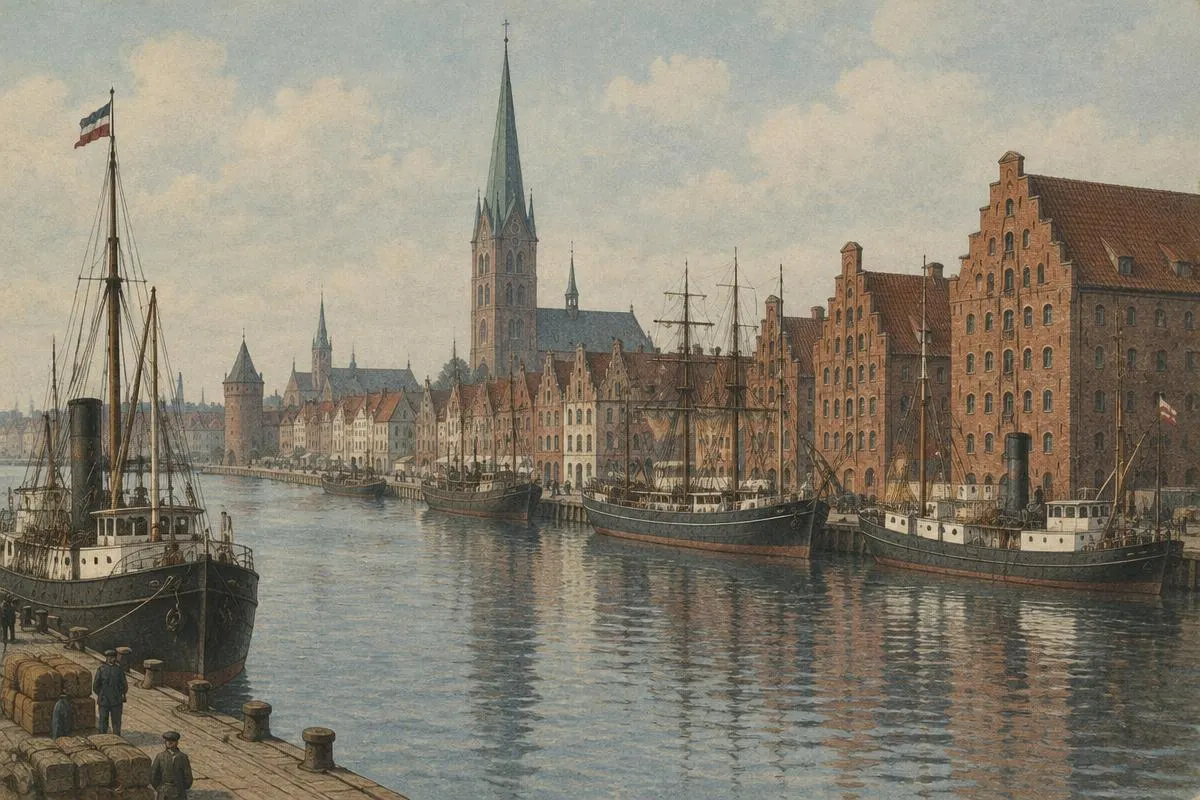
From the twelfth century, German merchants created a commercial network that would dominate northern European trade for three hundred years. After Lübeck was refounded in 1159, it became the hub of what historians call the Hanseatic League — a loose association of merchant communities and towns, rather than a state. Member cities included Hamburg, Wismar, Rostock, Stralsund, Danzig (Gdańsk), Riga and Visby, with trading offices in Bergen, London, Bruges and Novgorod.
The workhorse of Hanseatic trade was the cog, a broad, high-sided sailing ship able to carry large cargoes of grain, salt, herring, cloth, furs, wax and timber. The herring fishery off Scania, then part of Denmark, was one of the richest resources in Europe and drew merchants from across the Baltic every autumn.
Control of the Øresund was a constant source of tension. From 1429 the Danish crown charged the Sound Toll on ships passing Helsingør, a levy that lasted until 1857. Conflicts between Denmark and the Hanseatic towns, such as the war ended by the Peace of Stralsund in 1370, show how closely politics and shipping were bound together.
The Age of Sailing Ships
From the sixteenth to the early nineteenth century, larger and more sophisticated sailing ships carried the Baltic's growing trade. Dutch fluyts, efficient cargo vessels with small crews, dominated the grain and timber trade for much of the seventeenth century. Sweden rose to become a Baltic great power and, after the Treaty of Roskilde in 1658, gained Scania, Halland and Blekinge from Denmark — placing the Øresund between two different kingdoms.
Passenger travel in this period was irregular. Post boats and packet ships carried mail and a handful of travellers on fixed routes, such as the royal postal crossing between Denmark and Sweden, but departures depended on wind and weather. A crossing that took an hour in good conditions could be delayed for days by storms or calm.
The Industrial Revolution
Steam propulsion transformed sea travel because it made departures predictable. After early experiments in Britain and the United States, steamers soon appeared in Scandinavian waters. In 1819 the paddle steamer Caledonia began service between Copenhagen and Kiel, one of the earliest regular steamship connections in the Baltic. Within a few decades, steamers ran between most major ports in the region.
Iron hulls, screw propellers and more efficient compound engines followed over the nineteenth century. Ships became larger, faster and safer. At the same time, railways began to spread across Germany, Denmark and Sweden from the 1840s and 1850s, creating a new demand: travellers and freight arriving by train wanted to continue across the water without delay.
The Emergence of Passenger Ferries
The word "ferry" implies a regular, scheduled service across a fixed stretch of water, and this is what steam made possible. During the second half of the nineteenth century, timetabled passenger steamers linked Copenhagen with Malmö, Helsingør with Helsingborg, and Danish ports with Kiel, Lübeck and Stettin. Companies published timetables, sold tickets at quayside offices and coordinated departures with railway arrivals.
These services served an increasingly mobile population: business travellers, emigrants on their way to North America via Hamburg or Copenhagen, students and, from the late nineteenth century, the first tourists visiting seaside resorts.
Railway Ferries
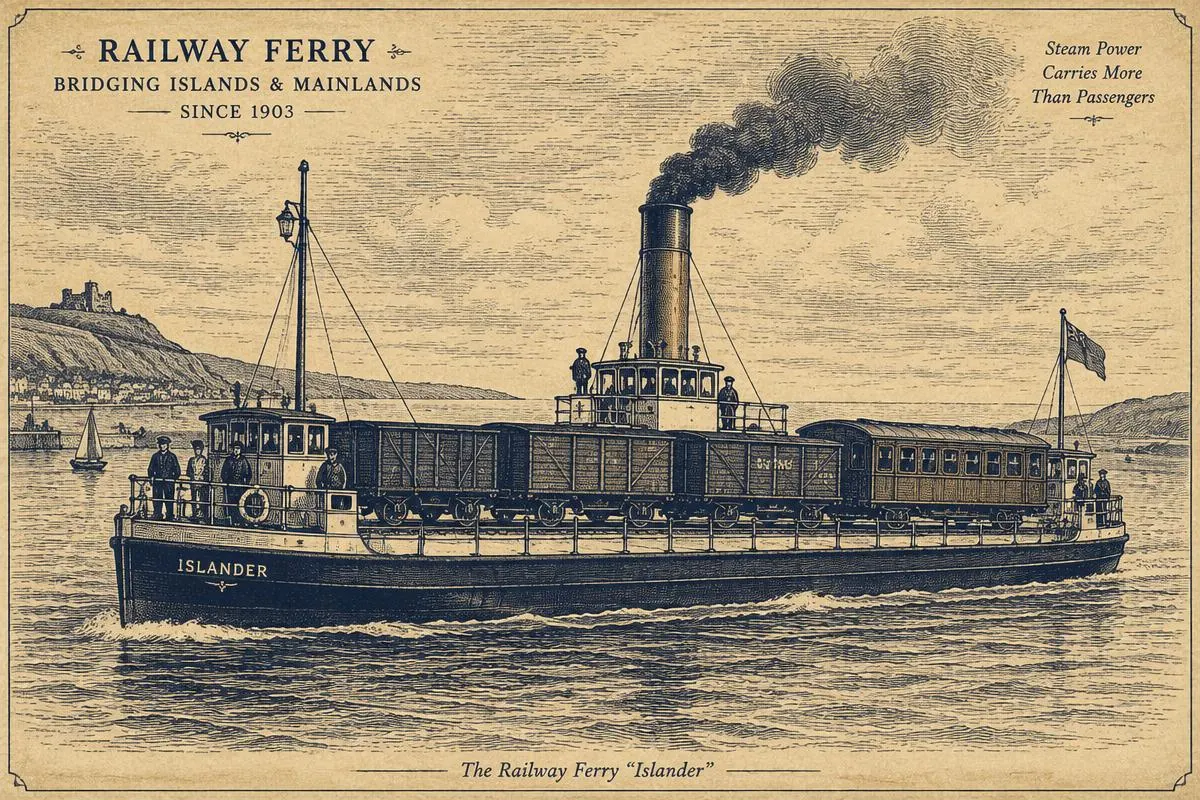
Transferring passengers and cargo between trains and ships was slow and labour-intensive. The solution was to carry the railway wagons themselves. Denmark, divided by water, became a pioneer: Danish State Railways (DSB) introduced train ferries across the Great Belt between Nyborg and Korsør in 1883. Rail ferries followed across the Øresund between Helsingør and Helsingborg in 1892, between Gedser and Warnemünde in 1903, and between Sassnitz and Trelleborg in 1909, creating the "King's Line" between Berlin and Stockholm.
Train ferries had rails laid on their car decks and needed specially built harbour berths with adjustable link spans so that trains could roll on and off regardless of the water level. For almost a century they formed the backbone of international rail travel between continental Europe and Scandinavia; through-coaches and night trains from Germany to Copenhagen or Stockholm travelled by sea for part of their journey.
Automobile Ferries
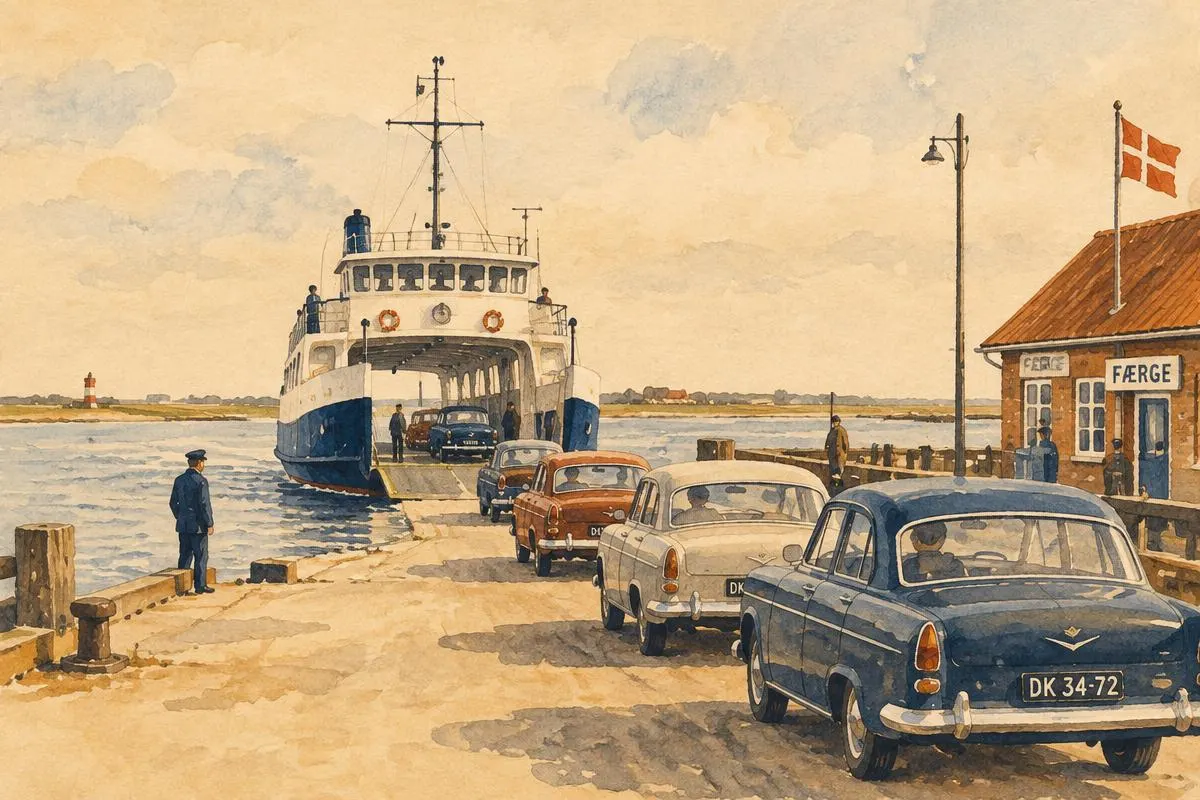
The rise of private motoring after the Second World War changed ferry design profoundly. Instead of lifting cars aboard by crane, ferries were built with large open vehicle decks and bow or stern doors, allowing cars and lorries to drive straight on and off — the roll-on/roll-off principle. Double-ended ferries, which can sail in either direction without turning, became common on short crossings because they speed up loading and turnaround.
Car ferries made tourism by road possible on a large scale. By the 1960s and 1970s, families from Germany, the Netherlands and beyond drove north for holidays in Denmark, Sweden and Norway, while heavy goods vehicles began to replace much rail freight.
Modern Baltic Sea Ferry Networks
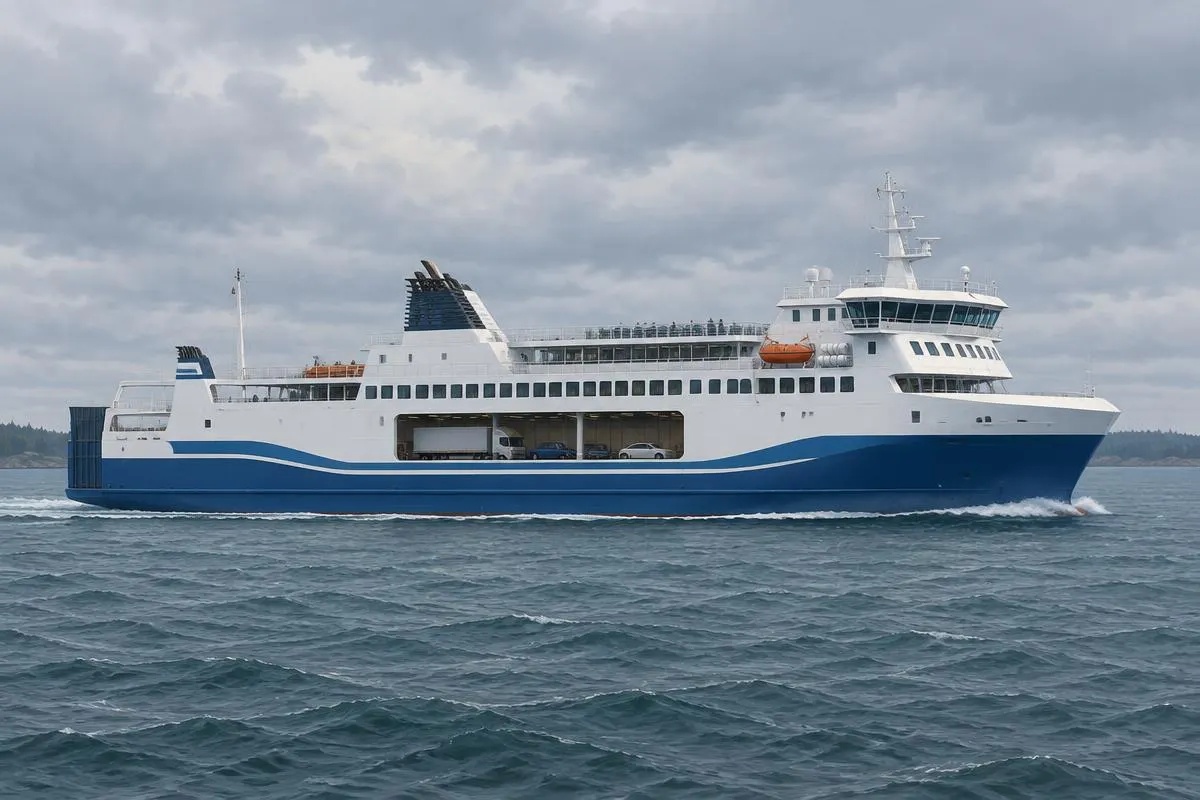
The late twentieth century brought both consolidation and competition. National railway ferry operations were reorganised into commercial companies. In 1998, the ferry division of DSB and the German Deutsche Fährgesellschaft Ostsee merged to form Scandlines, which operated several routes between Denmark, Germany and Sweden; the company's route network has changed several times since, and some former Scandlines routes are now run by other operators.
At the same time, fixed links reshaped the map. The Great Belt Fixed Link opened to rail traffic in 1997 and to road traffic in 1998, ending the historic Nyborg–Korsør ferries. The Øresund Bridge followed in 2000. Ferries remained essential, however, on longer crossings and where no bridge exists, and the network today combines ferries, bridges and tunnels.
The Future of Baltic Sea Transportation
Environmental regulation is now one of the main drivers of change. The Baltic Sea is a designated Sulphur Emission Control Area, requiring ships to use low-sulphur fuel or exhaust cleaning systems. Operators have introduced hybrid diesel-electric ferries with large battery packs, shore power at terminals and, on some routes, fully electric vessels. Research continues into methanol, hydrogen and other alternative fuels.
Infrastructure is changing as well. A fixed tunnel link under the Fehmarn Belt between Germany and Denmark is under construction; its eventual opening will affect traffic on the Puttgarden–Rødby route. The history of Baltic transport suggests that ferries, bridges and tunnels will continue to complement one another, each suited to particular distances, cargoes and travellers.
- 1159
Lübeck refounded
Beginning of Lübeck's rise as Hanseatic hub.
- 1429
Sound Toll introduced
Denmark levies dues on ships passing the Øresund (abolished 1857).
- 1658
Treaty of Roskilde
Scania becomes Swedish; the Øresund now separates two kingdoms.
- 1819
Caledonia
Steamship service between Copenhagen and Kiel.
- 1883
Great Belt train ferries
First Danish railway ferries between Nyborg and Korsør.
- 1998
Scandlines formed
Merger of Danish and German state ferry operations.
- 2000
Øresund Bridge
Fixed link between Denmark and Sweden opens.