Chapter I
The Baltic Sea — A Region Connected by Water
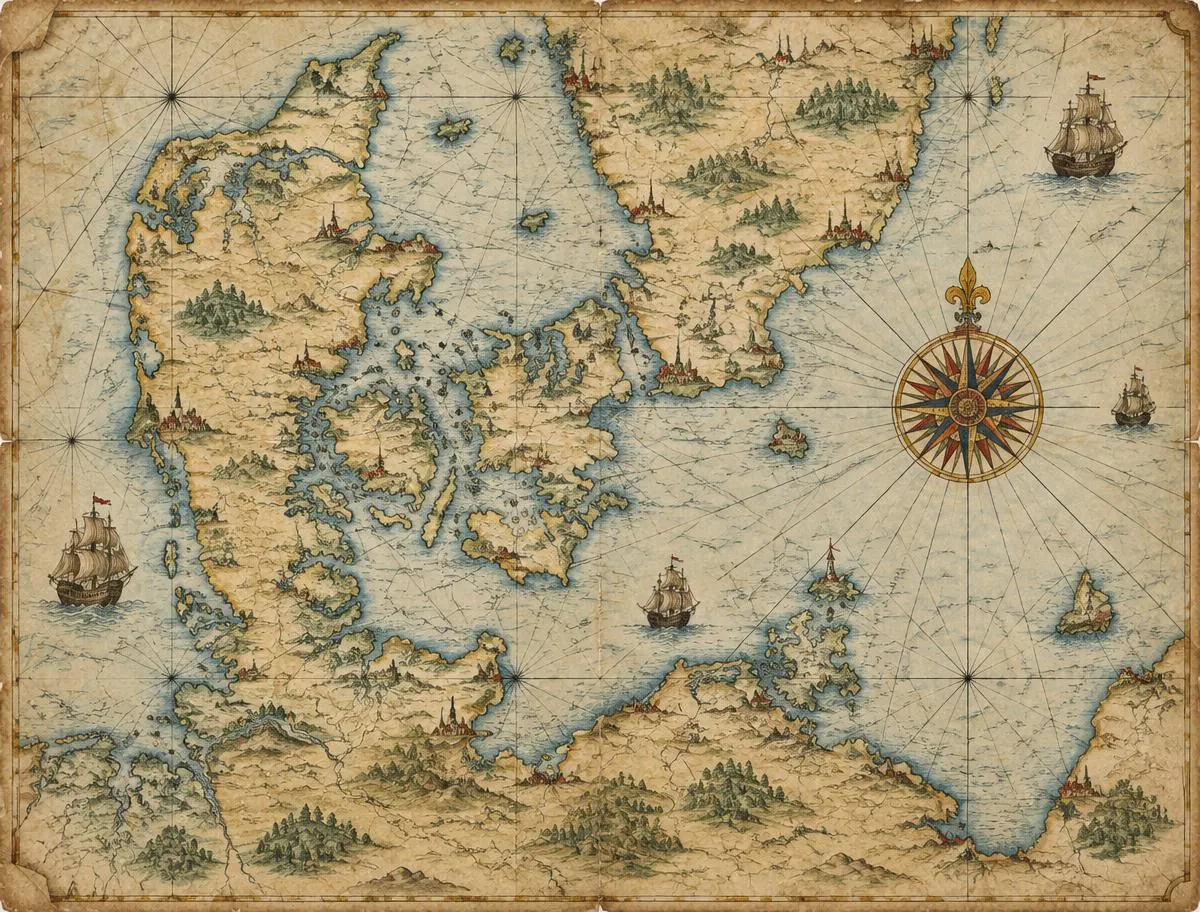
Look at a map of northern Europe and the importance of the Baltic Sea becomes obvious. It is a long, shallow inland sea, almost enclosed by land, reaching from the Danish straits in the west to the gulfs of Finland and Bothnia in the north and east. Its only link to the North Sea and the Atlantic runs through three narrow channels: the Øresund, the Great Belt and the Little Belt. Whoever travelled between continental Europe and Scandinavia had to deal with these waters.
Germany, Denmark and Sweden have shared this sea for more than a thousand years. Denmark sits at the hinge, a peninsula and a scatter of islands between the German mainland and the Swedish province of Scania, which itself was Danish until 1658. For centuries the three peoples traded, intermarried, fought wars and exchanged ideas across short stretches of water. Political borders moved repeatedly; the sea stayed constant.
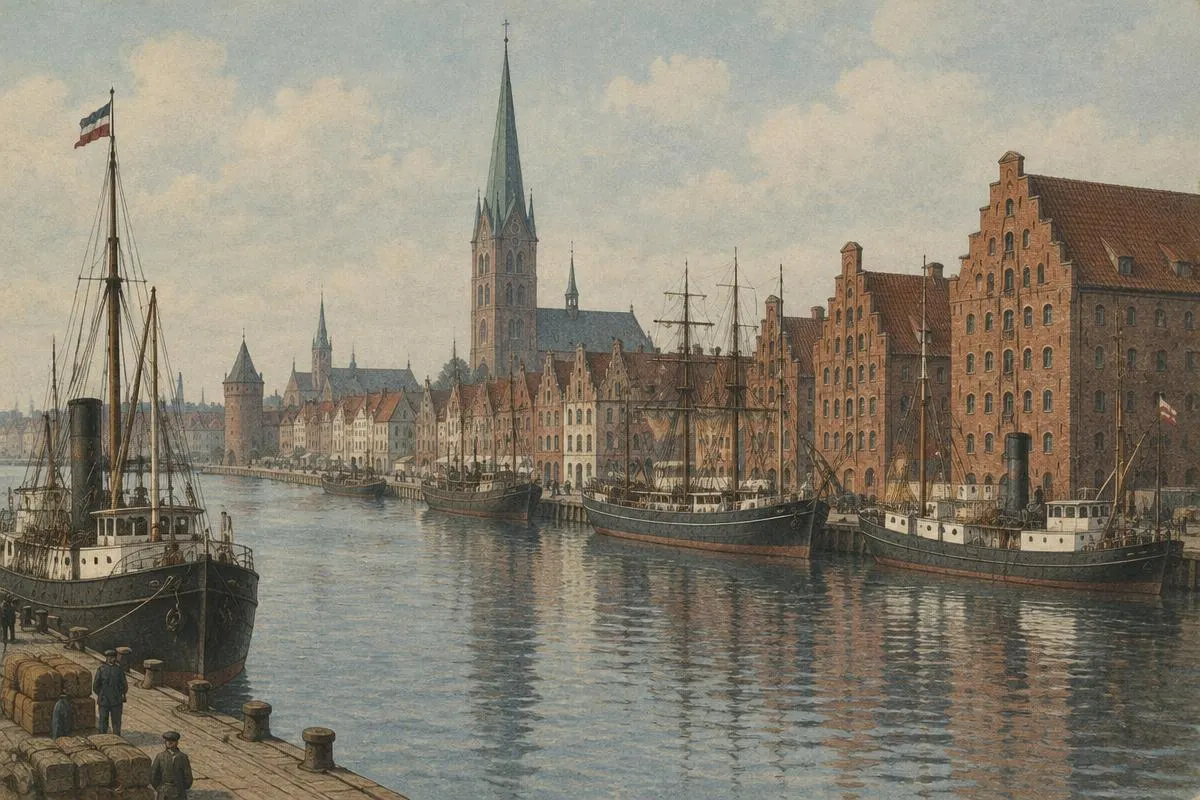
Because so much of the region is made of islands and coastline, maritime transport was not a luxury but a necessity. Before modern bridges, a journey from Hamburg to Copenhagen, or from Copenhagen to Malmö, always involved at least one crossing by boat. Grain, timber, iron, herring, salt and textiles moved by ship long before railways existed, and the coastal towns that handled this traffic — Lübeck, Rostock, Wismar, Copenhagen, Helsingør, Malmö — became some of the wealthiest places in medieval Europe.
Sea routes also carried culture. Merchants brought architecture, law, language and religion with them. The brick Gothic churches of the southern Baltic, the Low German loanwords in the Scandinavian languages and the shared urban traditions of Hanseatic towns are all legacies of ships moving between ports.
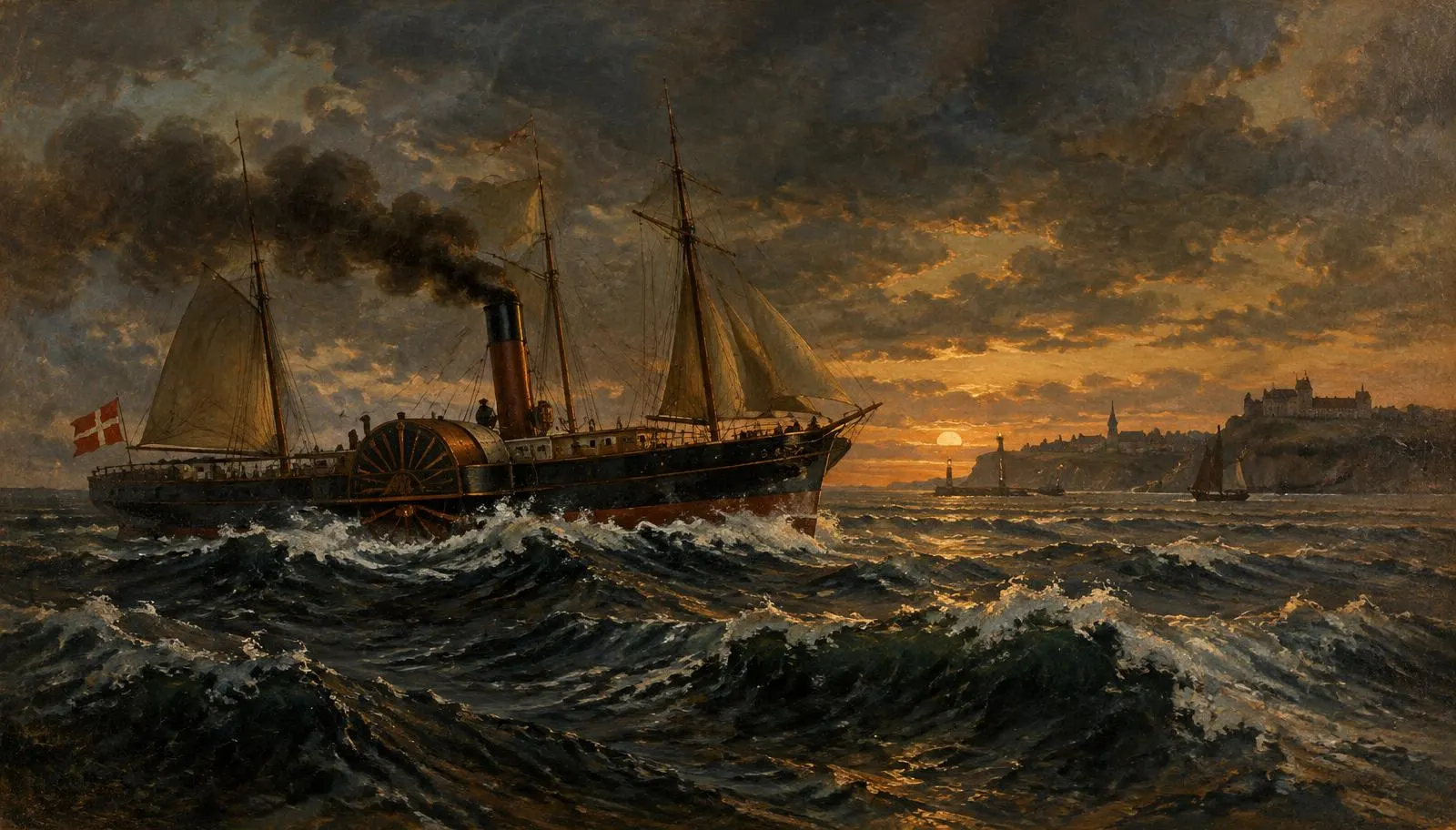
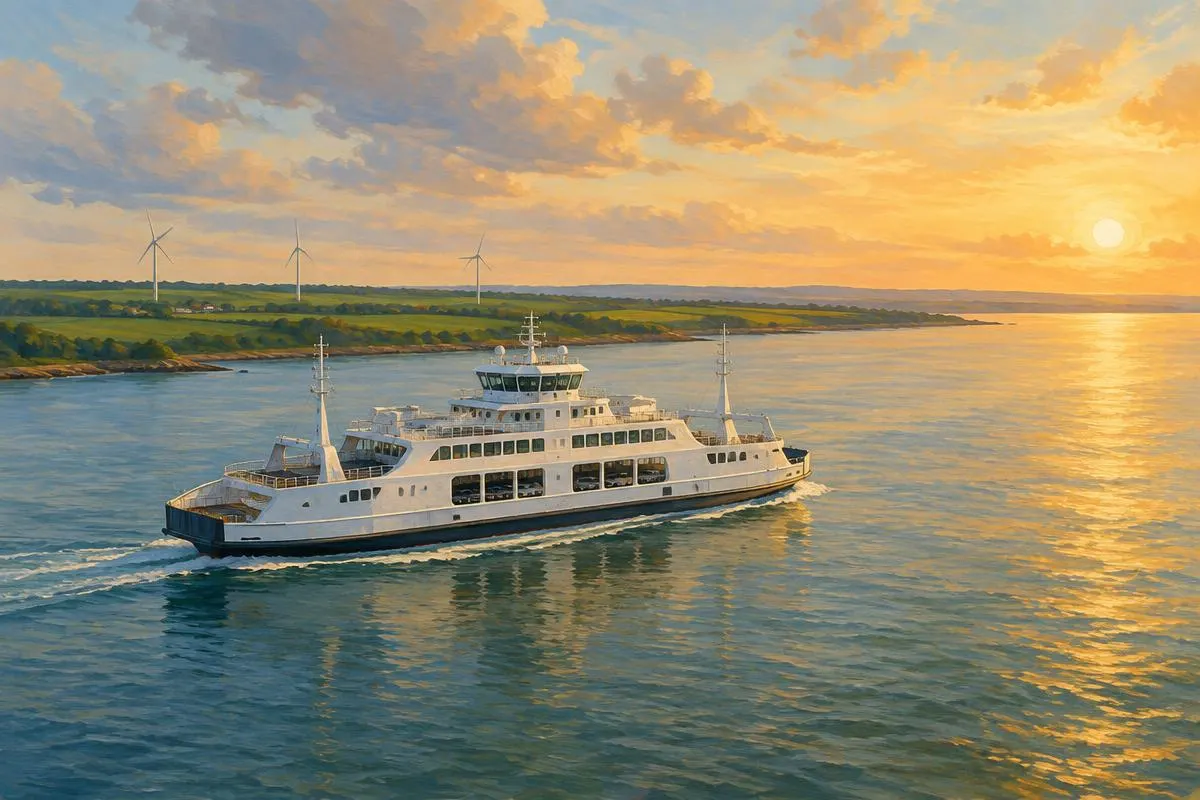
Passenger transport grew out of this commercial network. Early travellers simply bought passage on cargo vessels or small sailing packets. With the arrival of steam power in the nineteenth century, crossings became scheduled, reliable and far less dependent on the wind. Railways then created a demand for ferries that could carry entire trains, and the twentieth-century rise of the private car produced the drive-on vehicle ferry that still links the region today. The story of Baltic ferries is therefore the story of how geography, trade and technology together shaped everyday travel in northern Europe.